
Grove School
Maths
Our vision for Mathematics
At Grove, we believe that every child can succeed in mathematics, everyone can be a mathematician. We aim to develop confident, resilient and enthusiastic mathematicians who are able to reason, solve problems and make connections across different areas of mathematics. Through carefully structured teaching, rich mathematical discussion and daily opportunities to practise key skills, we help all children develop a deep and secure understanding of mathematical concepts.
A Teaching for Mastery School
We are proud to be in our fourth year of working with the Central Maths Hub as part of the national Teaching for Mastery Programme, coordinated by the National Centre for Excellence in the Teaching of Mathematics (NCETM). The Maths Hubs Programme supports schools across England to improve mathematics teaching through collaborative professional development and evidence-informed practice.
Parents can find out more about:
- Central Maths Hub: https://www.centralmathshub.com/
- NCETM Teaching for Mastery: https://www.ncetm.org.uk/
The Five Big Ideas of Teaching for Mastery
Our approach is underpinned by the NCETM's Five Big Ideas:
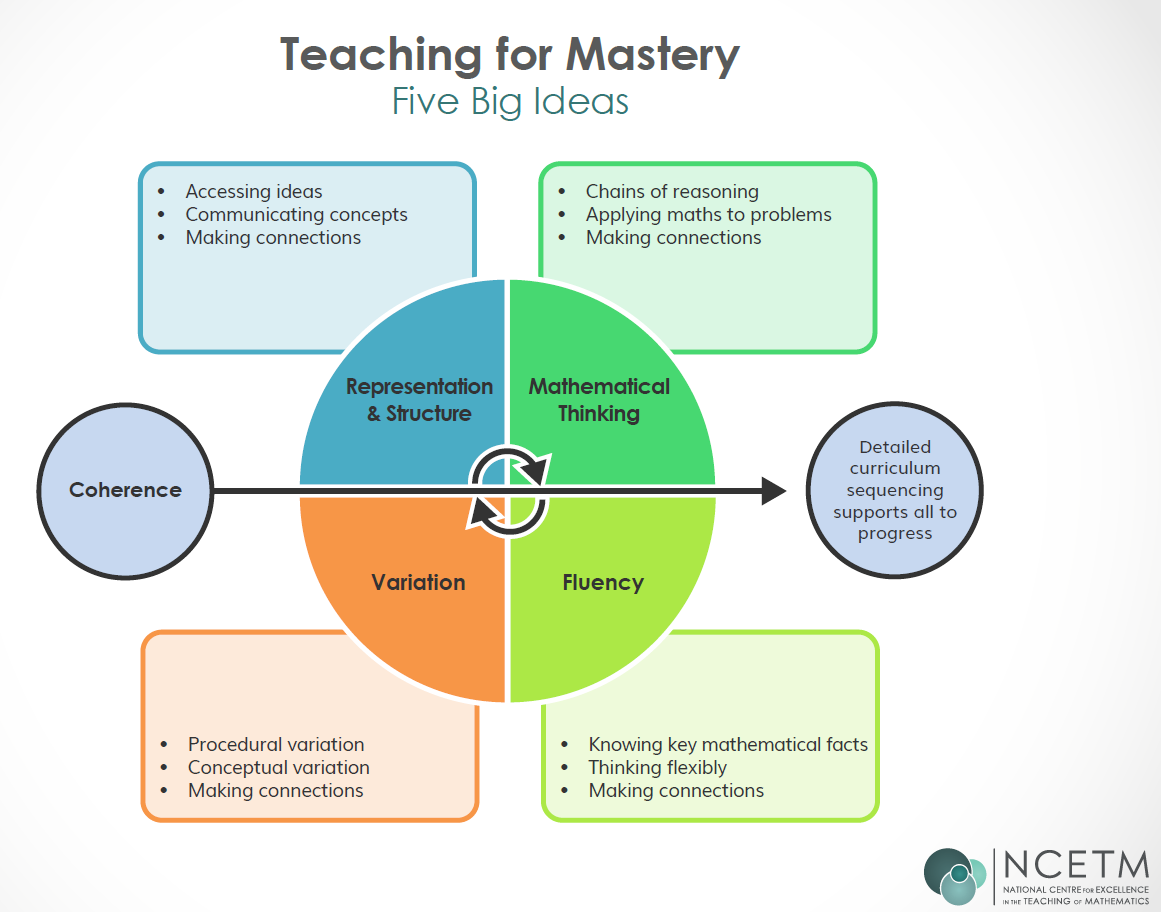
Coherence
Learning is broken down into small, connected steps so that children build secure understanding before moving on.
Representation and Structure
Concrete resources, pictorial representations and mathematical models are used to reveal mathematical structures and relationships.
Mathematical Thinking
Children are encouraged to explore, question, reason, explain and justify their thinking.
Fluency
Children develop efficient, accurate and flexible recall of key facts and procedures through regular practice.
Variation
Teachers carefully vary examples and questions to draw attention to important mathematical ideas and deepen understanding.
Using these principles ensures that pupils develop a rich understanding of mathematics rather than simply learning procedures and rules.
Mathematics in Reception
In Reception, children develop strong mathematical foundations through high-quality direct teaching and purposeful play.
We use the NCETM Mastering Number Programme as a central part of our mathematics provision. This programme is designed to develop strong number sense and secure foundations in early mathematics, helping children gain fluency and flexibility with number from the very beginning of their mathematical journey.
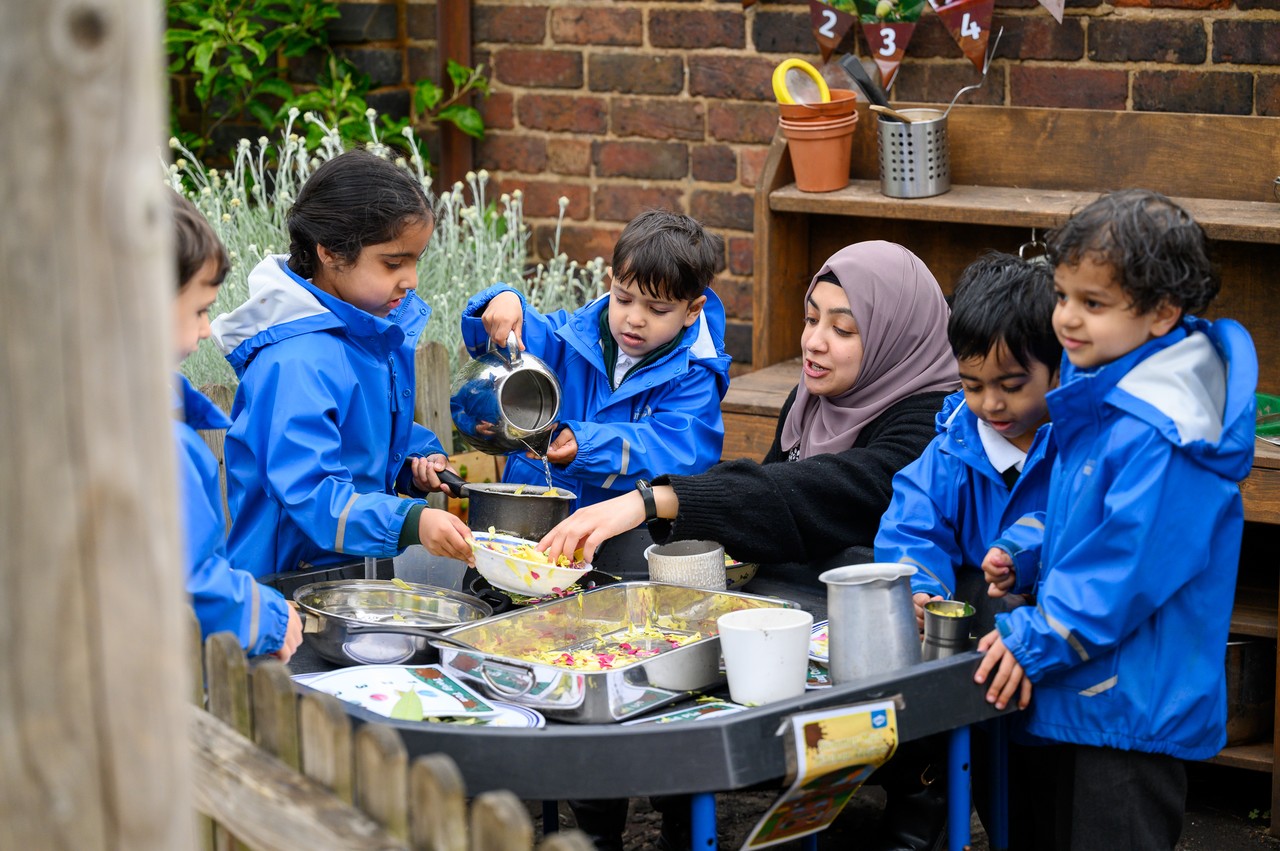
Our daily Mastering Number sessions provide explicit teaching of key mathematical concepts. These learning experiences are then extended throughout the learning environment, with carefully planned continuous provision activities that encourage children to:
- Explore number independently
- Apply mathematical ideas in meaningful contexts
- Talk about and explain their mathematical thinking
- Develop confidence and enjoyment in mathematics
By weaving mathematical opportunities throughout the indoor and outdoor environment, children are able to revisit and deepen their learning through exploration and play.
Daily Maths Fluency from Reception to Year 6
Alongside their main mathematics lesson, every child from Reception to Year 6 participates in a dedicated daily mathematics fluency session.
These sessions are designed to strengthen children's understanding of number and improve automatic recall of key facts, enabling them to think more deeply during their main mathematics lessons.
We use the NCETM Mastering Number materials across the school to support this work. The programme aims to develop secure number sense, fluency, confidence and flexibility with number.
To find out more about Mastering Number, visit:
NCETM Mastering Number https://www.ncetm.org.uk/maths-hubs-projects/mastering-number-at-reception-and-ks1/
Maths No Problem! 
In September 2025, we introduced the Maths No Problem! scheme across the school as part of our continued commitment to providing the highest quality mathematics education for all pupils. This is an approved DfE maths scheme.
Our decision to adopt Maths No Problem! was carefully considered and aligns closely with our Teaching for Mastery approach. The programme is based on the highly successful mathematics teaching methods used in Singapore, which is internationally recognised for high achievement in mathematics. It emphasises deep conceptual understanding, mathematical reasoning, problem-solving and fluency, ensuring that children truly understand mathematical concepts rather than simply learning procedures.
We chose Maths No Problem! because it complements the work we have undertaken through the Central Maths Hub and the NCETM Teaching for Mastery Programme. The scheme provides a coherent curriculum journey from Reception to Year 6, with lessons carefully sequenced in small steps to build secure understanding and confidence in mathematics.
Through Maths No Problem!, pupils are encouraged to:
- Think mathematically and explain their reasoning.
- Use concrete resources and visual representations to deepen understanding.
- Develop fluency alongside conceptual understanding.
- Solve increasingly complex problems.
- Make connections between different areas of mathematics.
Since introducing the scheme, staff have undertaken extensive professional development to ensure that lessons consistently reflect the principles of mastery. This has helped us continue to strengthen mathematical understanding, promote high expectations for all learners and ensure that every child can achieve success in mathematics.
When combined with our daily Mastering Number fluency sessions and our ongoing work with the Central Maths Hub, Maths No Problem! forms an important part of our vision to develop confident, capable and enthusiastic mathematicians.
Supporting Mathematics at Home
If you are a parent, you need to know you play a vital role in helping your child develop positive attitudes towards mathematics. Some of the most effective mathematical learning happens during everyday family routines.
Everyday mathematics at home
You can support your child by encouraging them to:
- Count objects when setting the table or tidying up
- Compare and estimate quantities
- Tell the time and discuss daily schedules
- Handle money while shopping
- Measure ingredients when cooking
- Discuss shapes and patterns around the home
- Read timetables and calendars
- Practise multiplication facts and number bonds regularly
Regular mathematical conversations help children develop confidence and see the relevance of mathematics in everyday life.
Online Learning Platforms
To further support fluency and confidence, pupils have access to a range of high-quality online learning tools.
Numbots - 
Numbots helps younger children develop rapid recall of number bonds and basic addition and subtraction facts through engaging activities and games.
Times Tables Rock Stars 
Times Tables Rock Stars supports children in developing fast and accurate recall of multiplication and division facts through motivating challenges and competitions.
Maths Shed - 
Maths Shed provides a wide range of fluency games and activities that support number skills, arithmetic and mathematical reasoning.
DoodleMaths - 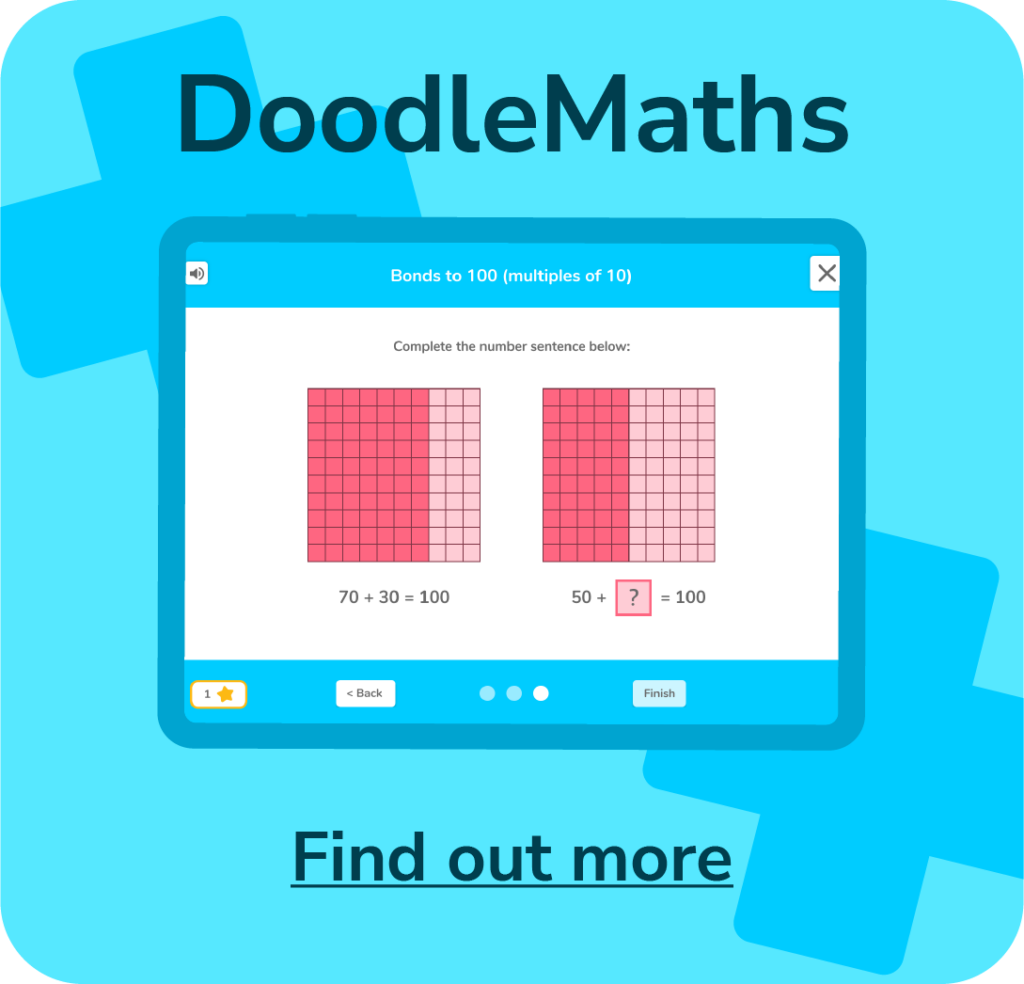
DoodleMaths provides personalised practice tailored to each child's needs, helping them build confidence and maintain progress through regular short practice sessions.
We encourage children to engage with these platforms regularly at home. Short, frequent practice sessions often have the greatest impact on fluency and confidence.
Mathematical learning behaviours
The answer is just the beginning
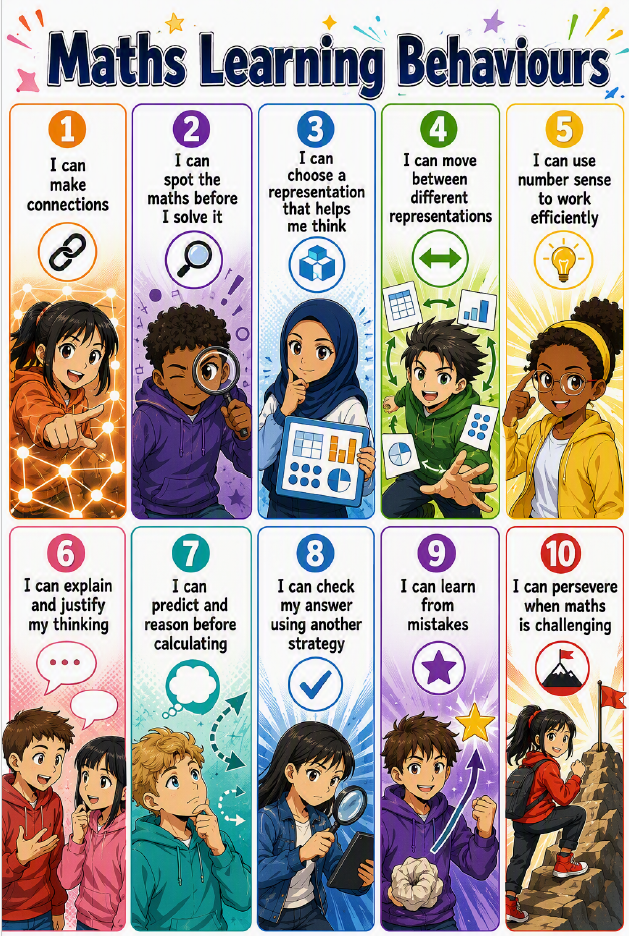
At Grove, we believe that mathematics is about much more than simply getting the correct answer. Whilst accuracy is important, the most powerful learning often happens in the thinking, reasoning, discussion and exploration that lead to an answer. We encourage children to be mathematicians: to ask questions, spot patterns, make connections, explain their thinking, learn from mistakes and persevere when faced with challenge. We want our pupils to develop the confidence to take risks, justify their ideas and recognise that there are often many different ways to solve a problem. In mathematics, the answer is often just the starting point for deeper thinking and understanding.
To celebrate these important aspects of learning, we recognise and reward positive mathematical learning behaviours every week. Children are encouraged to demonstrate the following qualities:
- Perseverance – keeping going when learning is challenging.
- Resilience – learning from mistakes and trying different approaches.
- Reasoning – explaining and justifying mathematical thinking.
- Problem Solving – applying mathematical knowledge in new and unfamiliar situations.
- Curiosity – asking questions and exploring mathematical ideas.
- Collaboration – working effectively with others and learning through discussion.
- Mathematical Oracy – using precise mathematical vocabulary to explain thinking and communicate ideas clearly.
- Independence – taking responsibility for learning and selecting appropriate strategies and resources.
- Creativity – finding efficient methods, making connections and exploring alternative solutions.
- Positive Attitude – approaching mathematics with enthusiasm, confidence and a willingness to learn.
By valuing these behaviours alongside achievement, we help children develop the habits, confidence and mindset needed to become successful mathematicians for life.
Working Together
Our aim is for every child to leave our school as a confident mathematician who has developed a secure understanding of mathematics, enjoys challenge, and can apply their knowledge in a wide variety of contexts. Through strong partnerships between school and home, we can ensure that every child develops the mathematical knowledge and confidence they need for future success.