
Grove School
English
Phonics at Grove School
At Grove School, our mantra is phonics comes first. Our systematic, synthetic phonics scheme is Little Wandle Letters and Sounds Revised. Pupils in Early Years, Key Stage One and those who need additional support in Key Stage Two have a daily phonics lesson. These pupils learn the sounds that each letter (grapheme) makes. Pupils review and revise the sounds (phonemes) each grapheme makes in words and sentences. Blending is a key skill we practice every day.
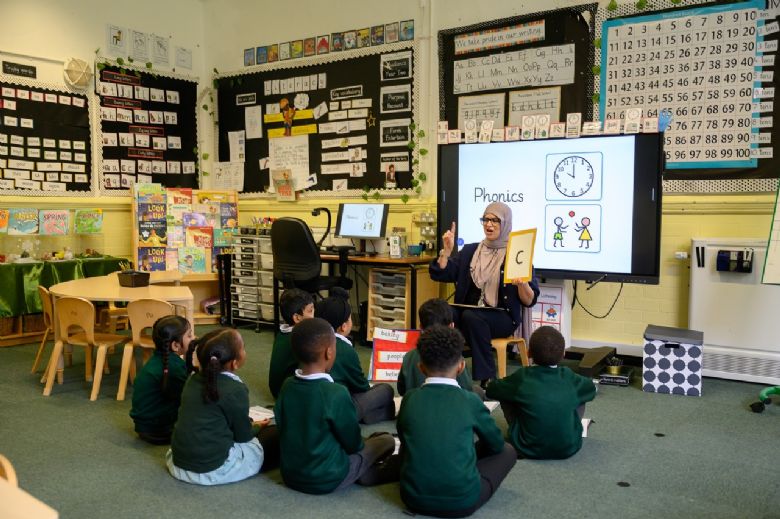
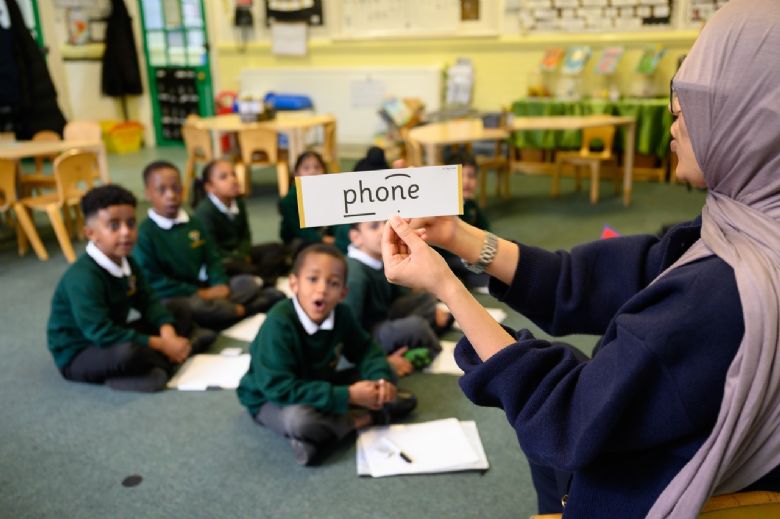
Please follow the link to Little Wandle Letters and Sounds Revised to find out more about how we teach phonics at Grove.
Here is a link to our phonics scheme for parents: https://www.littlewandle.org.uk/resources/for-parents/
Reading at Grove School
Our vision is that every child can:
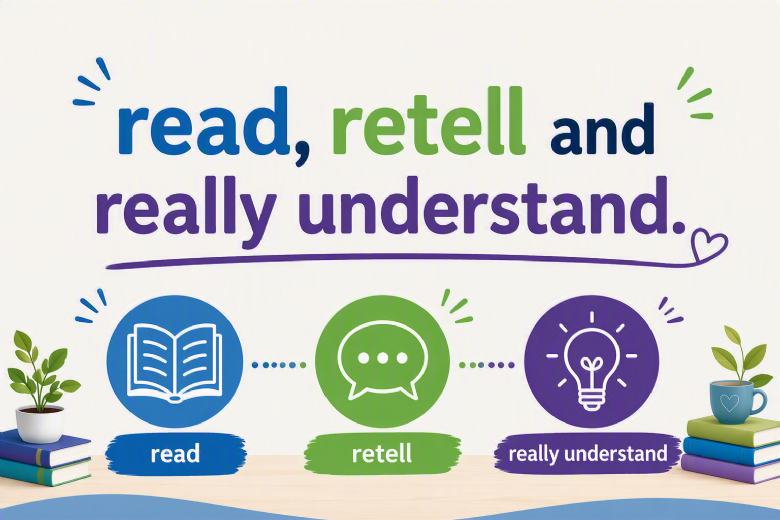
Developing early reading skills is a priority in EYFS and Key Stage One. Staff at Grove School recognise that pupils need to learn to read as quickly as possible so that they can move from learning to read, to reading to learn. This gives pupils access to the treasure house of reading. We want all pupils at Grove School to read easily, fluently and with good understanding.
Pupils from Reception to Year 6 have a daily reading lesson.
Our reading scheme for Early Years, Key Stage One and Key Stage Two is Big Cat Collins. When pupils read these books in Early Years and Key Stage One, the books are fully decodable and are matched to the pupils' stage of learning in phonics.
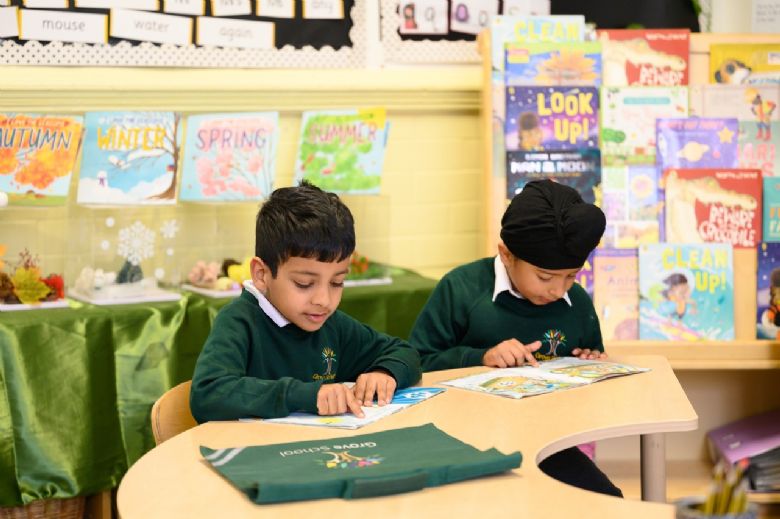
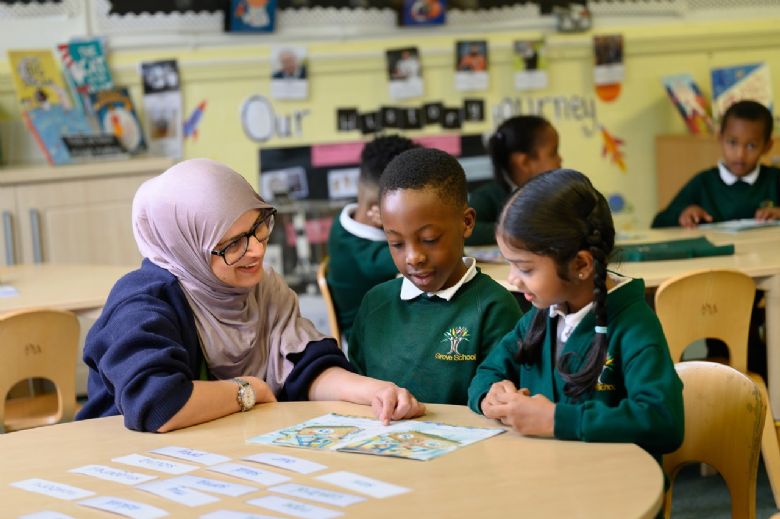
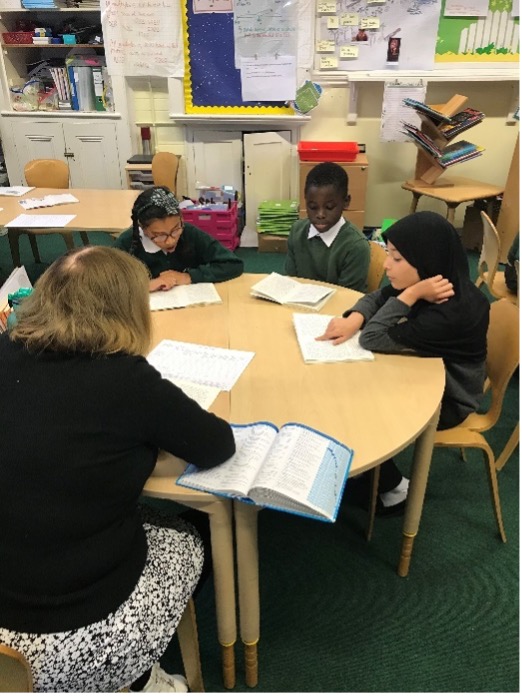
To develop the habit of reading widely and often; reading for pleasure; and reading for information, high-quality story books and class novels are read aloud to pupils from Nursery to Year 6 daily. These texts have been carefully selected to capture the pupils’ attention and deepen their understanding of key themes in the curriculum for reading.
Along with taking home their reading book which is linked to the phonic sounds the pupils are learning 4 days a week, pupils in Early Years select reading for pleasure books from our reading room.
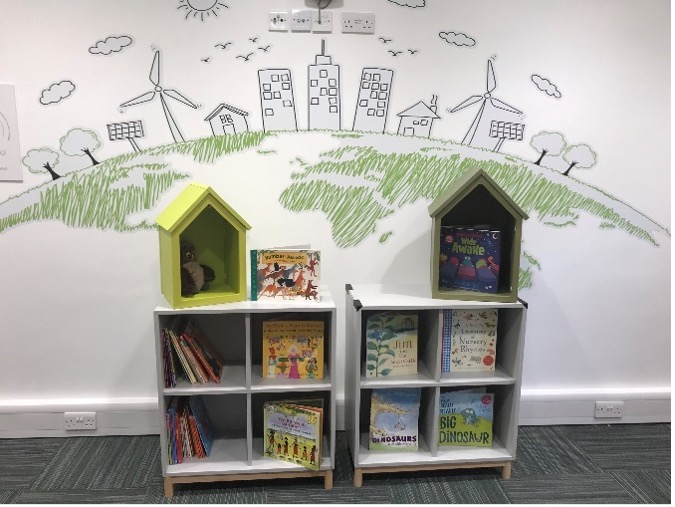
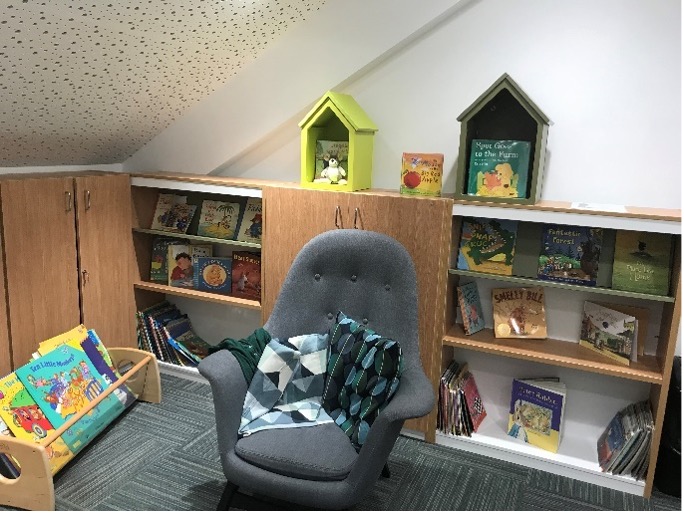
Pupils in Key Stage One take home a book to read 4 days a week which is matched to what they are learning in phonics lessons as well as a reading for pleasure book to share with a grown-up at home.
In Key Stage Two, staff use their knowledge of their pupils’ reading habits to support pupils with selecting a weekly reading for pleasure home reading book.
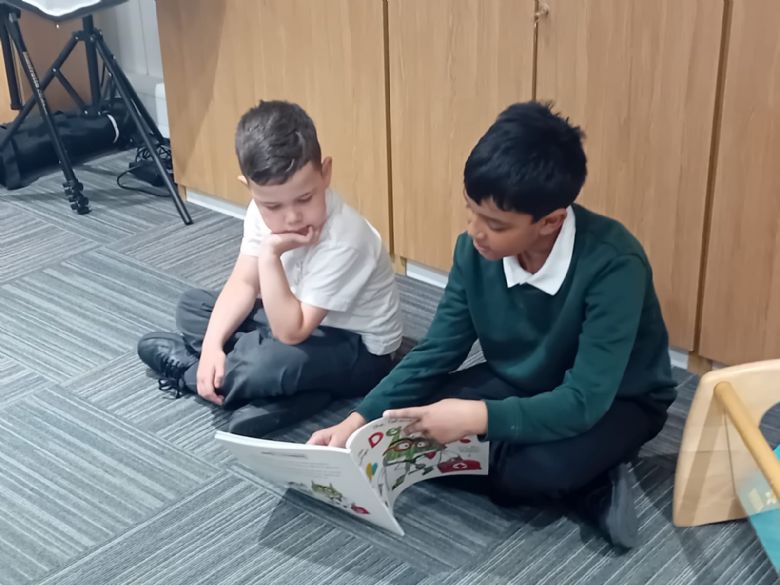
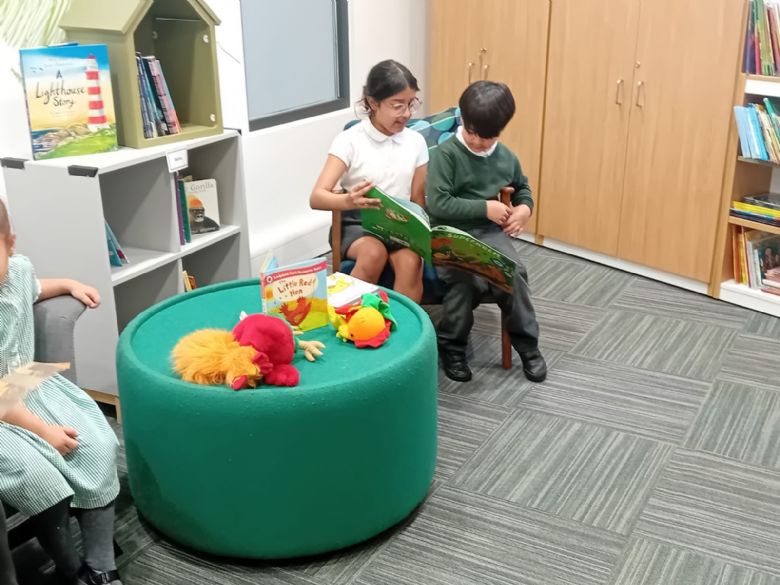
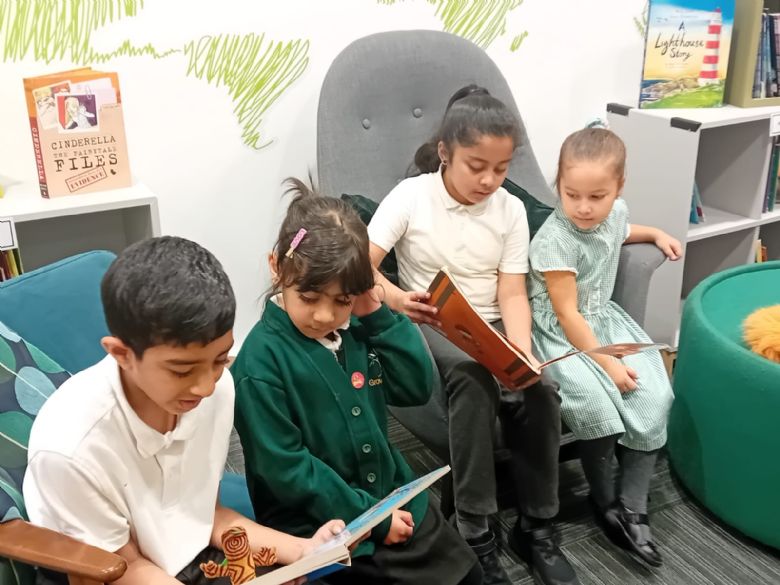
The English curriculum is vibrant and provides all children with opportunities to meet a range of texts which are diverse and cover a broad range of themes.
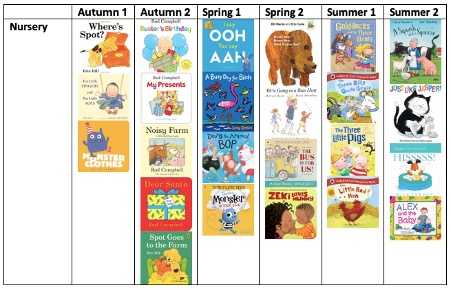
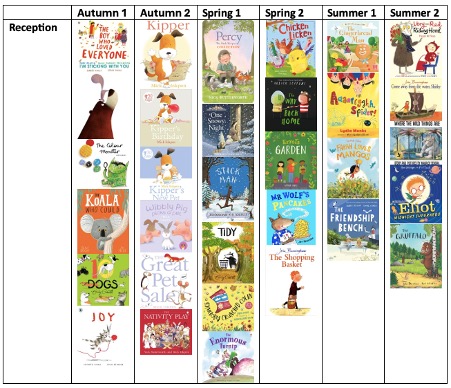
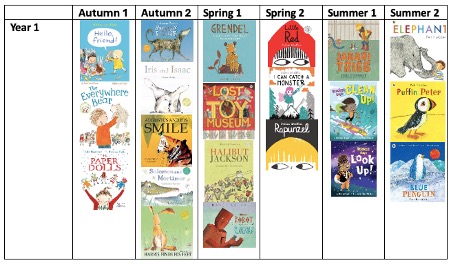
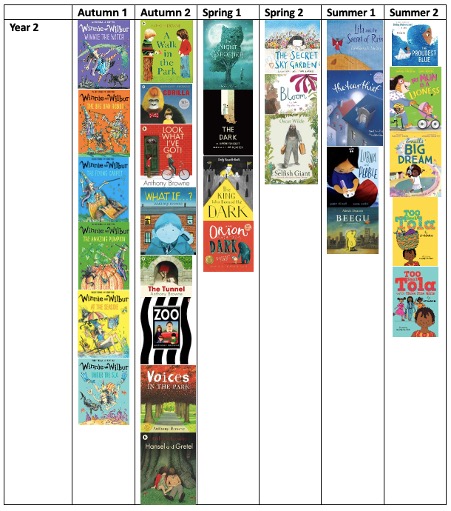
The school has a core text curriculum for Early Years and Key Stage One. The curriculum is sequenced so that pupils experience high-quality literature that allows teachers to develop concepts in grammar and literature which in turn support pupils' writing.
Below is the progression of some of the core texts that pupils in Early Years and Key Stage One experience:
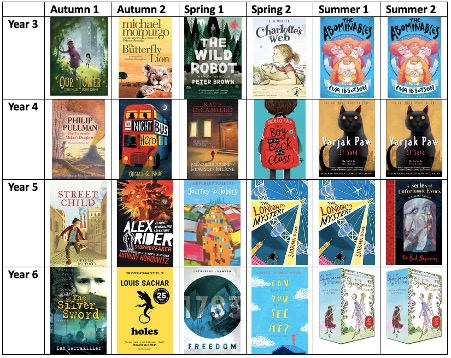
Leaders have written a class novel curriculum for Key Stage Two. The class novel curriculum engages pupils because it is relevant to the lived experiences of pupils, it prepares them for the next stage of education and supports pupils deepening their knowledge and understanding in other curriculum areas and of life in the 21st century.
Below is the progression of the class novels that pupils in Key Stage Two experience:
We recognise the important role parents play in supporting their children to learn to read. Our parents at Grove School are aspirational for their children. They know reading is key. Regular parental workshops help parents understand how we teach reading skills. Parents come into school and have watch their child being taught phonics and reading.
Writing at Grove School
At Grove, we want pupils to use what they read to strengthen and enrich their own writing.
We believe that children become successful writers when writing is meaningful, purposeful and relevant. We carefully plan engaging writing opportunities that inspire creativity, develop key writing skills and motivate every child to communicate effectively.
At the start of every piece of writing, pupils identify the audience they are writing for and consider the purpose of their writing. Children are encouraged to think carefully about how their writing will impact the reader and how they can adapt their language accordingly.
Writing tasks are chosen to engage all children and provide meaningful reasons to write. Through high-quality texts, real-life contexts and exciting cross-curricular links, pupils develop confidence as writers while crafting pieces for a range of authentic audiences and purposes. This helps children understand that writing is a powerful tool for communication and that their words can inform, influence and inspire others.
By providing purposeful writing experiences, we aim to develop enthusiastic, resilient and skilled writers who take pride in their work and see themselves as authors.
Pupils explore grammar in context through their core texts and class novels and apply this learning to their independent writing. Our writing curriculum also supports pupils in developing expertise in transcription, enabling them to become accurate and fluent writers.
From Early Years to Year 6, pupils are encouraged to write in a range of forms and for a variety of purposes, including:
-to entertain
-to make a record or reflect
-to teach
-to paint with words (poetry)
-to persuade or influence
Leaders have worked together to create clear progression documents for spelling, grammar and punctuation, and writing composition. These ensure that knowledge and skills build systematically over time and support pupils in becoming enthusiastic, resilient and skilled writers.